 Lower levels
Basements & rec rooms
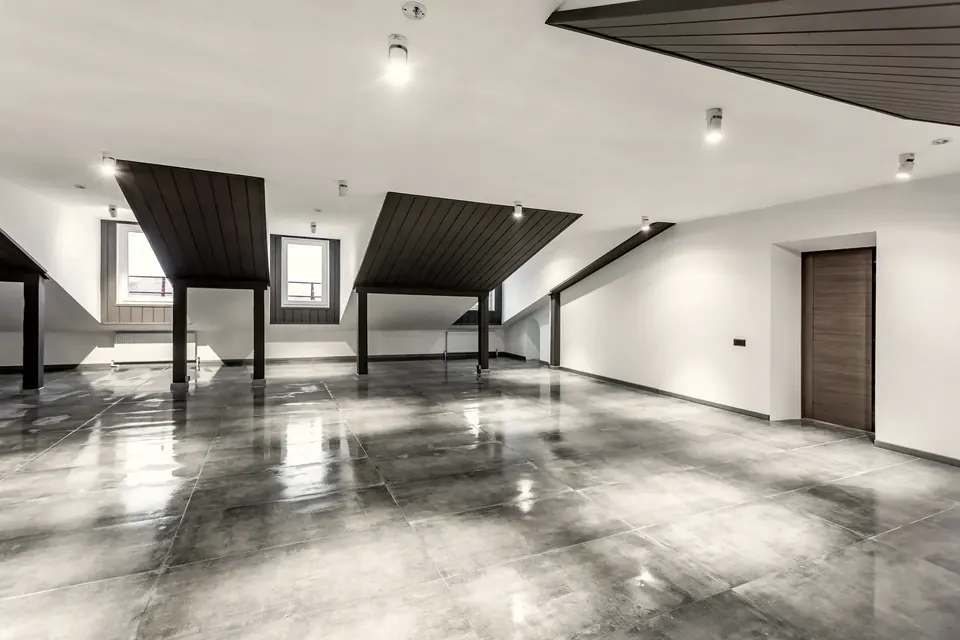
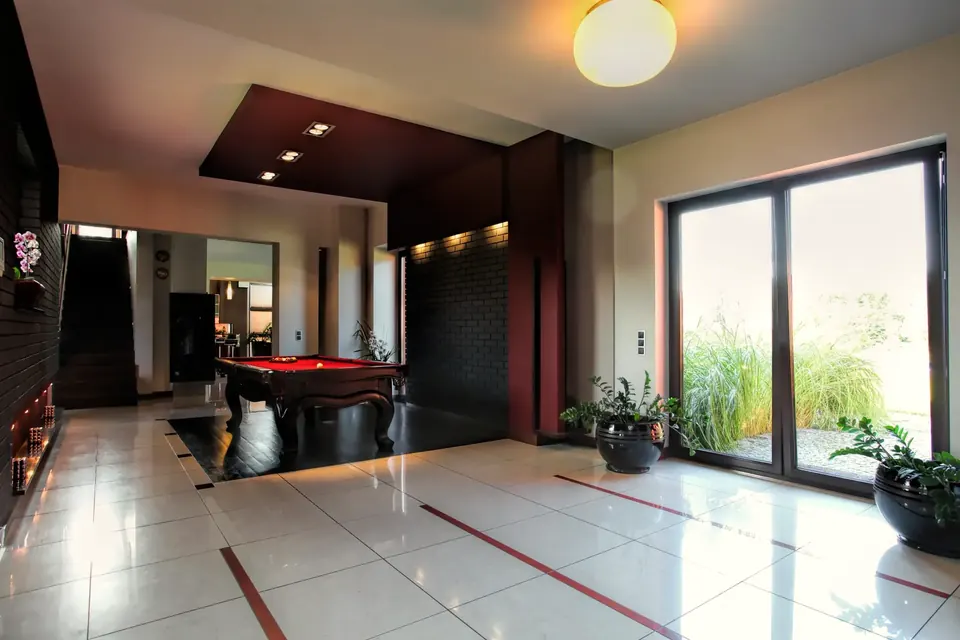
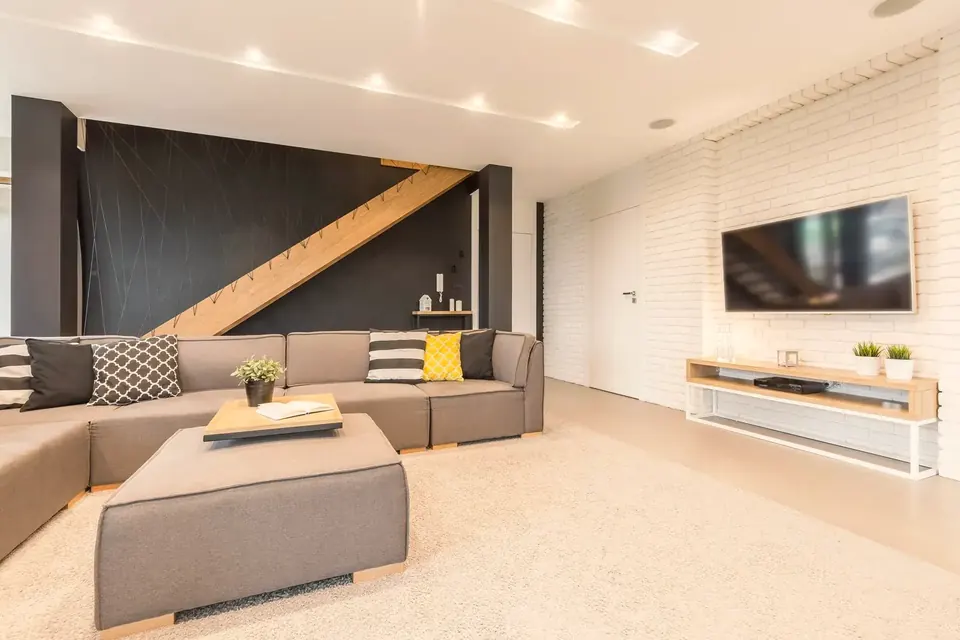
Finished or partly finished lower levels, game rooms and home theaters. A light, glossy or satin finish brightens rooms with small windows, and rugs can still go down for warmth where you want them.
Free on-site estimate
Tell us about the floor. We'll handle the rest.
Four quick fields. We'll follow up to schedule a visit, look at the slab in person and give you a written price for the system that suits it.
Residential epoxy flooring
Lower levels, mudrooms, laundry rooms and home gyms take water, grit and heavy use. A residential epoxy floor turns that bare or tired concrete into a surface that cleans easily and looks finished.
01Overview
Most homes around Menomonee Falls have at least one room sitting directly on a concrete slab. Usually it is the basement, sometimes a lower-level laundry, a mudroom off the garage, a utility room around the furnace and water heater, or a space that has quietly become the family gym. Those floors tend to get whatever is left in the budget: a coat of porch paint, a remnant rug, or nothing at all.
The trouble is that bare and painted concrete both work against you. Raw concrete sheds a fine gray dust that ends up on everything stored nearby. It soaks up spills and holds odors. Floor paint looks fine for a while, then wears through in traffic lanes and peels wherever moisture comes up from below. Neither one is pleasant to walk on barefoot or easy to keep clean.
A residential epoxy floor is a thin, seamless layer of resin that bonds to the prepared slab and cures into a hard, non-porous surface. It has no grout lines or seams for water to find. It can be built in solid colors, decorative flake, or metallic finishes, and in textures that range from smooth to grippy. Most importantly, it can be installed on slabs that would be a poor match for carpet, wood or many floating floors.
Interior work is a little different from garage work. Ventilation, odor, dust control and moisture all get more attention when the room is inside your living space, and the finished surface is often expected to look more refined. We plan for all of that from the first visit.
02Rooms we coat
These are the rooms we are asked about most. Each has its own priorities, so the system is adjusted to fit.
Lower levelsFinished or partly finished lower levels, game rooms and home theaters. A light, glossy or satin finish brightens rooms with small windows, and rugs can still go down for warmth where you want them.
 Entries
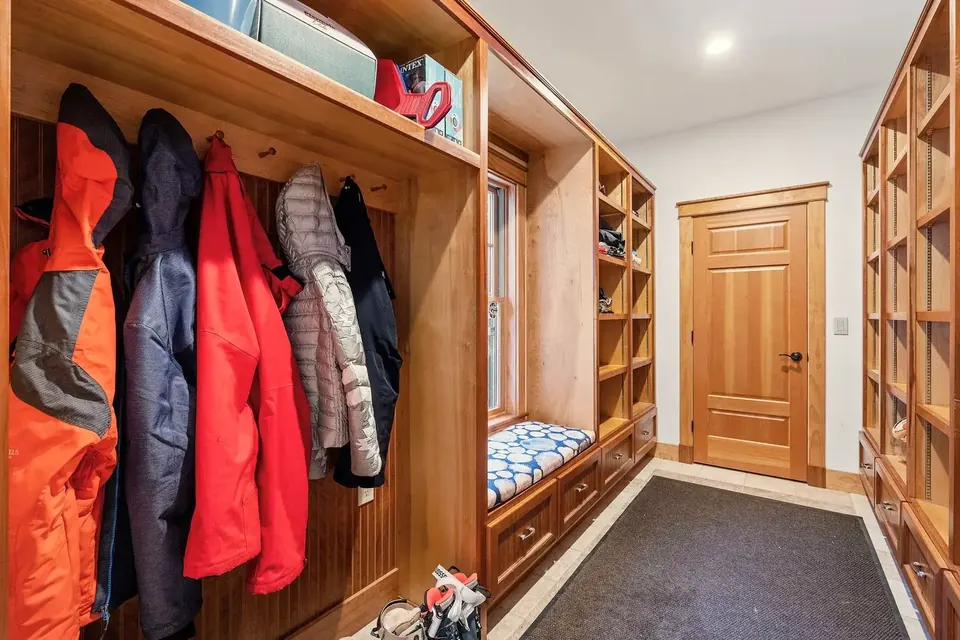
The first stop for wet boots, salt and dog paws. We add texture so the floor stays secure when it is wet and finish it with a cove at the base of walls and cabinets so water has nowhere to hide.
 Fitness
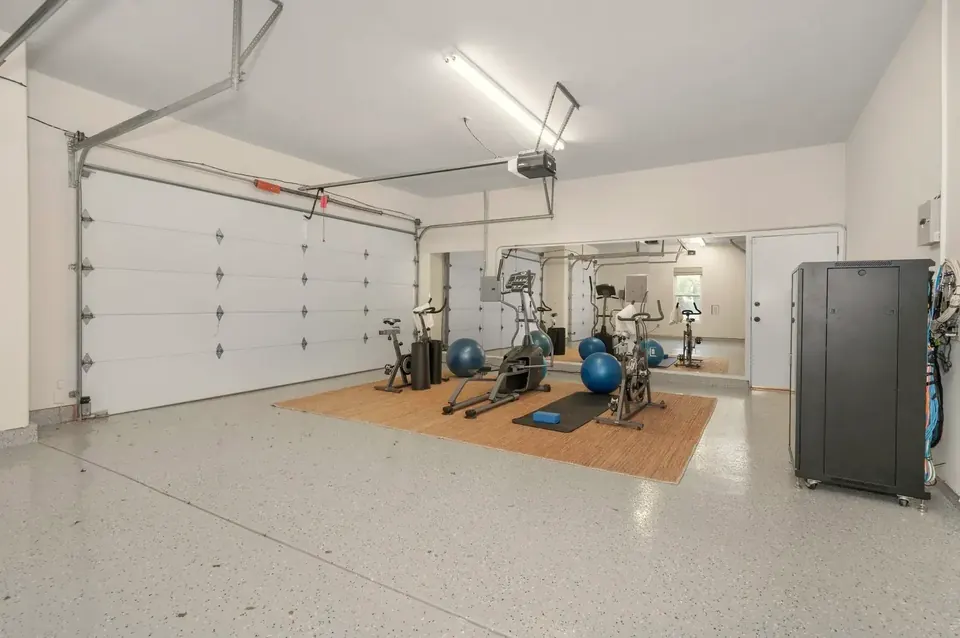
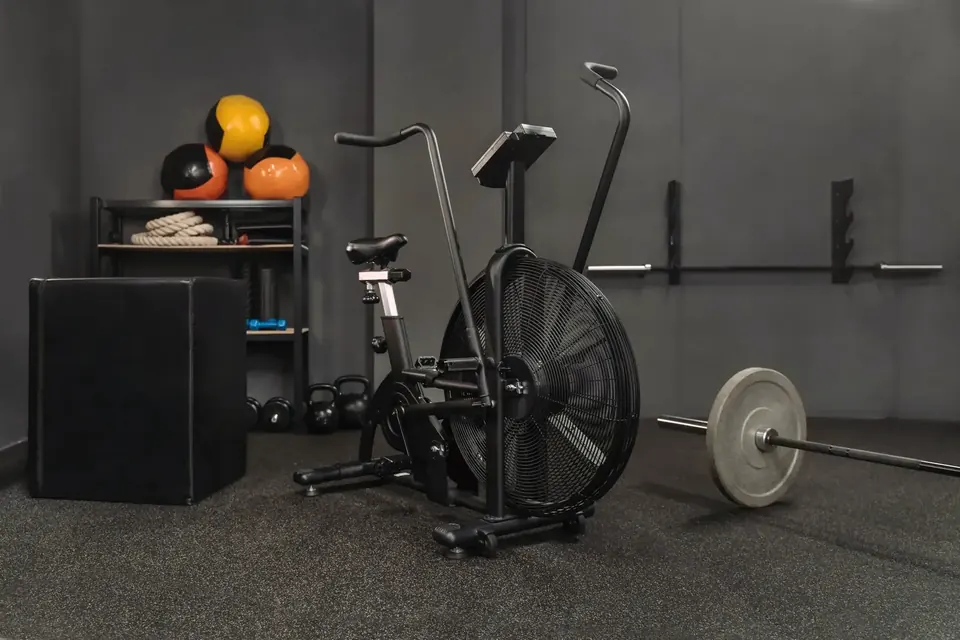
A dense coating handles dropped dumbbells better than bare concrete and wipes clean after a sweaty session. Many people lay rubber mats over the coated floor in the lifting area and leave the rest exposed.
 Utility
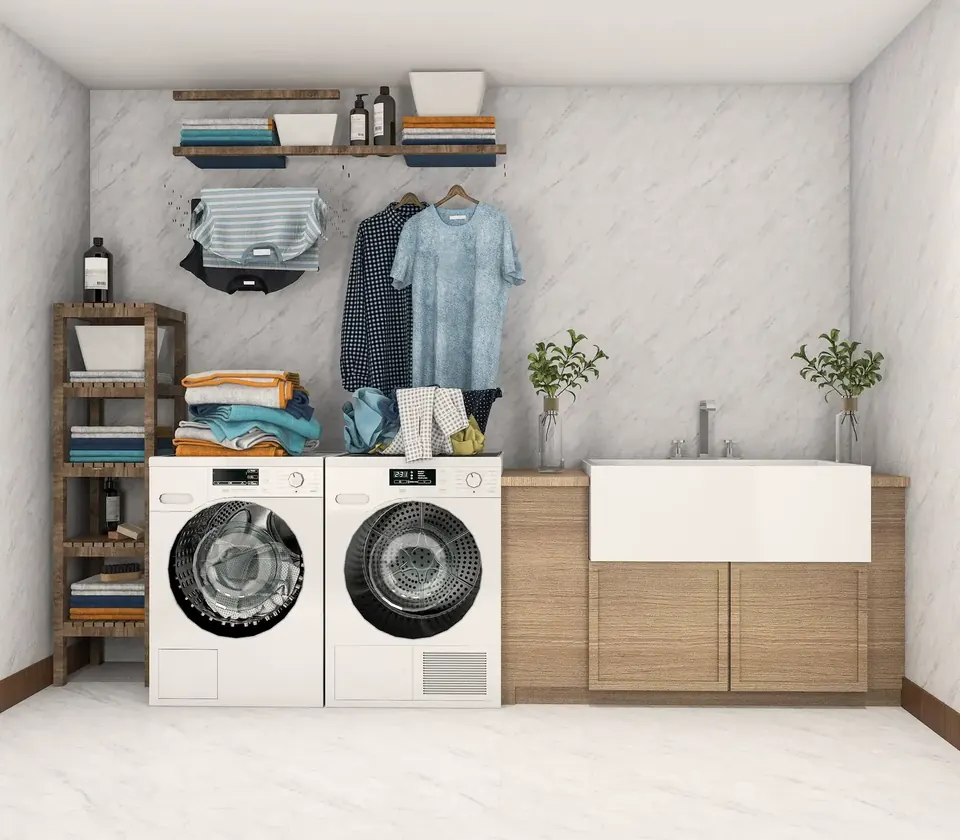
Washer overflows, water heater drips and detergent spills stay on the surface. A seamless floor makes it obvious when something starts leaking, which can save you from bigger problems.
 Hobbies
Sawdust sweeps up, paint and stain drips come off, and rolling tool carts move easily. Solid light colors make small parts easier to find when they hit the floor.
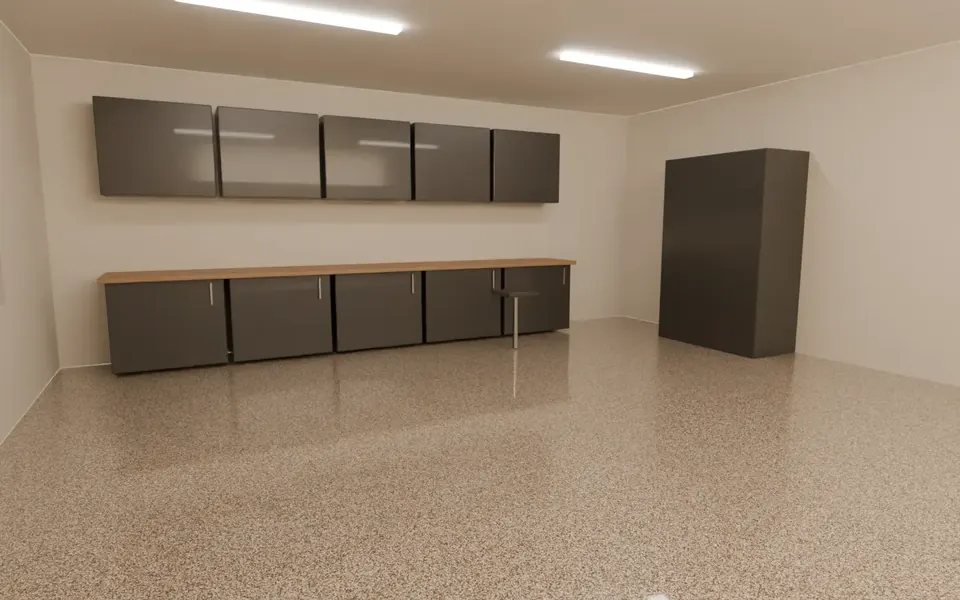 Storage
Seasonal storage, pantries and under-stair spaces benefit from a sealed floor that keeps dust down and makes it easy to clean up when a box gets wet.
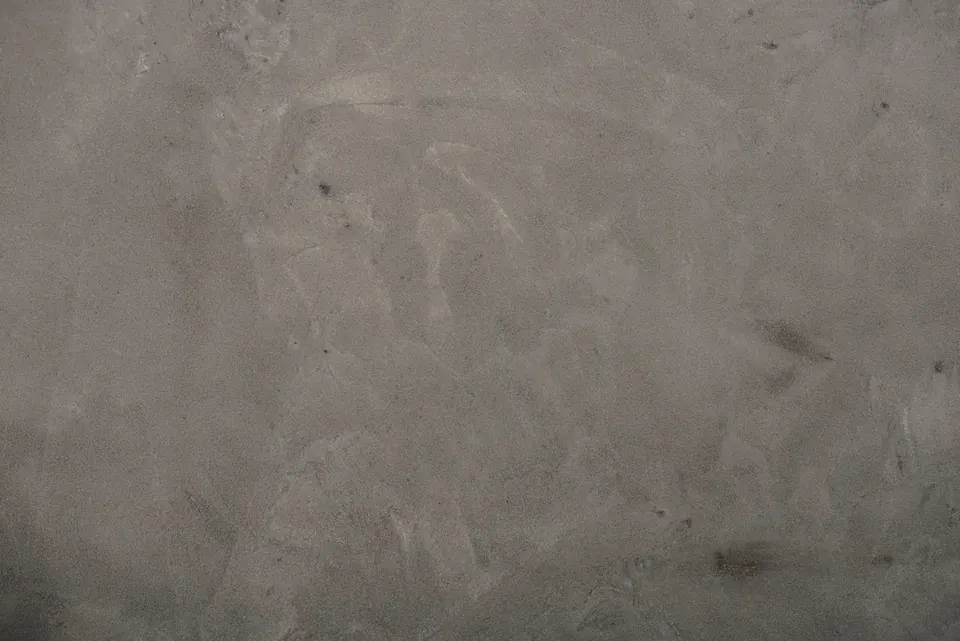
03Moisture first
Basement floors sit below grade, in contact with soil that holds water much of the year. Plenty of older houses here have no vapor barrier beneath the basement slab, and even recent builds can show elevated moisture after a wet spring. That vapor rises through the concrete. Under a non-breathable coating, it can build pressure and cause blisters or loss of bond.
So moisture testing is a standard part of any basement estimate. If readings are within the range the coating manufacturer allows, we proceed with a standard primer. If they are high, we use a moisture-mitigating epoxy primer designed to tolerate vapor transmission. If there is active water, such as seepage at a cove joint or a crack that weeps after rain, we will tell you the floor is not ready for a coating until that is addressed.
It is a less exciting conversation than picking colors, but it is the one that decides whether your floor lasts.
04Benefits
Sealing the slab stops the steady shedding of concrete dust onto stored items, mechanicals and anything you keep downstairs.
Water, pet accidents, paint and detergent sit on top of the coating so they can be wiped up instead of soaking in and staining.
Lighter colors reflect what little daylight a lower level gets, so the room feels larger and more welcoming.
The space looks intentional. It reads as part of the house, not a forgotten room at the bottom of the stairs.
05Wisconsin homes
Homes in and around the village span roughly a century of building practices, and that shows up in their slabs.
Mid-century homes near the original village core and in older subdivisions often have thinner slabs, patched areas and decades of paint. Removing those layers and repairing the surface is part of the plan.
Basements tend to be damper in summer and drier in winter. We take readings and choose application windows with that in mind, and we may recommend running a dehumidifier before installation.
Mudrooms and back halls see salt tracked in from driveways and sidewalks. Salt residue is abrasive and corrosive on bare concrete, but rinses off a sealed floor without harm.
A coating does not insulate a slab, but it does make it practical to lay area rugs or radiant mats without worrying about the concrete underneath getting dusty or stained.
06Installation
Most single-room residential floors are completed in two to three days. Larger lower levels with repairs or moisture mitigation can take a little longer.
We confirm what needs to be moved, how we will access the room and where equipment will run. Doors, stairs and adjacent rooms are sealed off with plastic.
Edges and open floor are diamond ground with vacuum dust collection. Old paint, adhesive and sealers are removed down to sound concrete.
Cracks and low spots are filled. The primer, standard or moisture-tolerant, is worked into the slab to establish the bond.
Color coats, flake broadcast or metallic layers go down next, depending on the finish you chose.
A clear topcoat sets durability and sheen. We ventilate the space during cure and give you a timeline for foot traffic and furniture.
07Comparisons
There is no single best basement floor. There is the best one for your slab.
People often weigh a coating against carpet, luxury vinyl plank or tile. Each has a place, and it helps to know the tradeoffs.
Carpet is warm and soft, which is a real advantage in a family room. It is also the least forgiving choice in a space that may ever see water. A small leak or high humidity can lead to odors and mold in the pad. Many homeowners end up coating the floor and using area rugs instead, so the rugs can be lifted out and dried if needed.
Vinyl plank is popular and looks like wood. It floats over the slab and generally tolerates moisture better than carpet, but water can still collect underneath, and the seams and transitions need care. It is a reasonable option in a dry basement where you want a wood look.
Ceramic and porcelain tile are durable and water-resistant, but installation is more labor-intensive, grout lines need upkeep, and tile can crack if the slab shifts. It feels cold underfoot without radiant heat.
A coating is seamless, cleans easily and bonds directly to the slab, so there is nothing for water to hide beneath. It is a good match for utility areas, gyms, workshops, mudrooms and lower levels where durability and cleanup matter. Decorative options like metallic epoxy make it at home in finished living spaces too.
08Questions
Coating a room inside the house raises different questions than a garage. Here are the usual ones.
Ask us directlyCertain resins do give off an odor during application and the first stage of cure. We select low-odor materials for interior spaces where possible, seal off the work area and ventilate. Most of the odor dissipates within a day or two. If anyone in the household is sensitive to smells, tell us and we will plan around it.
It depends on whether the problem has been fixed. Past water issues that have been resolved, such as a repaired downspout or regraded yard, are usually manageable with moisture testing and the right primer. Active seepage needs to be solved first. Coatings are not a waterproofing system.
A coated slab has the same temperature and firmness as the concrete beneath it. In living areas, many people add area rugs. In gyms, workshops and laundry rooms, the hard surface is often an advantage.
Area rugs are fine. If you think you might install wall-to-wall flooring in the future, mention it so we can talk about how a coating would affect that. In most cases the coating can serve as a clean, sealed subfloor.
Yes. Grinding and coating need open floor from wall to wall. Appliances like washers and dryers can usually be moved out temporarily and reconnected once the floor has cured. Furnaces and water heaters stay in place; we coat around them carefully.
A dust mop or vacuum handles most days. For a deeper clean, use a damp mop and a gentle, pH-neutral cleaner. Felt pads on chair and table legs prevent scuffs, and solvents should be wiped up soon after they land. That covers it for most homes.
10Free estimate
Book a visit. We will test the slab, look at the space with you and recommend a floor that suits how you use the room.